
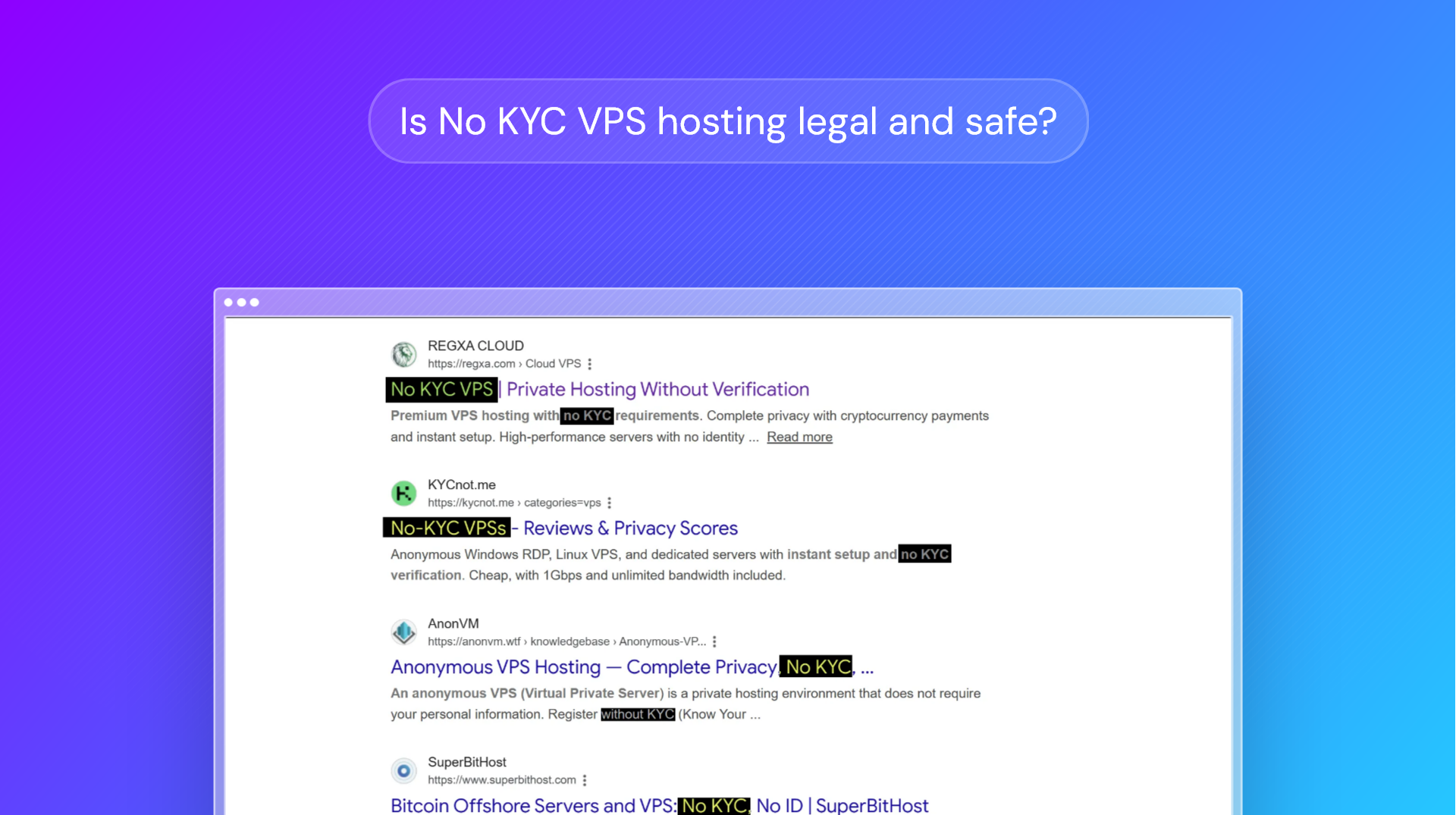
Few topics in hosting attract as much confident misinformation as “no KYC”. Some will tell you that not collecting customer information is flatly illegal, while others suggest that it’s a shady loophole in the law. Neither is correct, but since concerns about using no KYC VPSs persist, it's worth addressing.
What is No KYC VPS hosting?
KYC (Know Your Customer) is a process that retailers use to verify the identity of their clients and assess their risk profile. The intention is to reduce the chances that they accept a payment that is later revoked due to identity theft, money laundering, or other financial crimes. KYC usually involves collecting personal details such as the user’s ID, address, and phone number.
The legitimate use cases for no KYC
The argument we often hear against no KYC is “Why hide your payment details if you’re not doing something illegal?” This is the same tiring argument that has been used against privacy for decades. You don’t need a specific reason to want to keep your information private — privacy is a fundamental human right.
That said, there are various specific and legitimate reasons a person might not want their full name, address, and ID associated with their transactions. Private payment methods help with:
- Data breach concerns: We’ve seen personal information get leaked in data breaches time and time again. Every provider collecting this information becomes a breach target for hackers who can use it for identity theft and so on.
- Marketing and analytics concerns: Mastercard runs a substantial data and services business where it sells aggregated cardholder data to others for targeted advertising. Many middleman payment providers collect data on top and sell that data to other parties. This sort of cross-site tracking makes many deeply uncomfortable.
- Journalists and activists: It’s not always safe to speak your mind. Reporters investigating powerful people or researchers documenting abuses all have reason to keep their identity separate from their infrastructure.
- The unbanked: Some people just can’t fulfill KYC even if they wanted to. Billions of people across the world have no bank account, no government ID that matches a billing name, or no payment card. No KYC, combined with crypto, allows these users to gain access to the service we all rely on to create work, create businesses, and more.
- Faster deployment: No KYC means faster account creation, instant server deployment, and no approval delays.
Is no KYC illegal for VPS providers?
There’s nothing illegal about a VPS provider not accepting KYC. In almost all jurisdictions, KYC is an obligation imposed on financial institutions, not retailers. There’s no legal obligation for VPS providers to collect customer data, and no obligation for customers to provide it.
 bitlaunch
Check what data your VPS provider is collecting about you by reading their privacy policy.
When a no KYC provider gets raided, it's always related to their other practices: so-called "bulletproof" hosts that refuse to crack down on illegal activity. It’s entirely safe to use no KYC platforms as long as they and you follow other relevant laws.
Why do so many retailers collect KYC?
If there’s no legal reason for retailers to collect KYC, why do so many do it? It all comes down to the banking system. When a person’s card gets stolen and used to purchase a service, the bank performs a chargeback. The merchant often has to eat the loss and doesn’t recoup the costs of the service they provided. Repeat that hundreds of times, and suddenly your business model isn’t looking so profitable.
The other element is payment providers. Many chargebacks can place a retailer on a monitoring program by Visa or Mastercard, which can result in additional chargeback fees. If it keeps happening, the merchant can be dropped by the payment provider entirely and placed on an industry blacklist, making it very difficult for them to find another payment processor.
How BitLaunch avoids KYC
We avoid the pressure to collect your information entirely by accepting payment exclusively in cryptocurrency. Crypto is not controlled by financial institutions, which means no chargebacks, no traditional payment providers, and therefore no strong requirement for KYC. It also requires less billing-related personal data and supports pseudo-anonymous transactions, making it a great fit for users who don’t want every transaction linked to their real identity.
 bitlaunch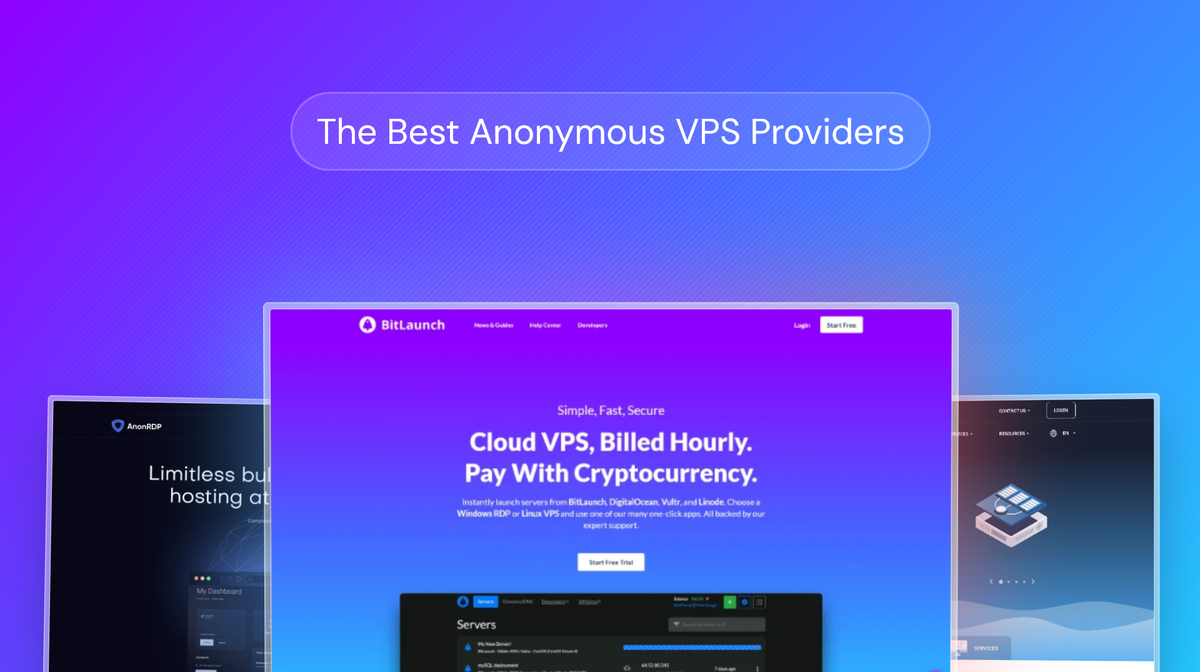
See how BitLaunch stacks up against other VPS providers.
Initially, we achieved this by using a third-party cryptocurrency payment provider. Over time, however, we grew uncomfortable with being beholden to a third party. Using a third-party payment provider means, at a minimum, passing transaction data on to somebody else. We weren’t comfortable with the possibility that a third party could mishandle your data or potentially even try to strong-arm us into adopting more privacy-invasive practices.
As a result, we built BLPay, an in-house system that allows us to accept cryptocurrency payments on your terms. With no privacy-invasive practices, quick transfers, no middlemen, and no third-party fees jacking up your prices.
Doing it this way exposes BitLaunch to a small amount of risk. While chargebacks aren’t an issue with crypto, there are some ways malicious users can trick a provider into thinking their payment is on the way when it actually isn’t. That’s a risk we’re willing to take to provide a service that’s quick, well-integrated, and respects your privacy.
Privacy with accountability

Providers who accept your crypto but fail to meet their legal obligations are being incredibly irresponsible. If they get raided, your server goes offline. If they get shut down, you'll probably lose any money deposited in your account. Despite being a no KYC provider, BitLaunch still:
- Explicitly forbids illegal activity in its terms of use
- Complies with copyright notices
- Employs a full-time, dedicated abuse team that works to proactively detect and shut down malicious and illegal activity
- Reactively shuts down illegal activity when reported by law enforcement or security researchers
- Blocks cryptocurrency payments from known illicit wallets
- Bans regions where a high percentage of abuse originates
Picking a provider that does no KYC for the right reasons gives you the upsides without the risk. No identity documents waiting to leak or spending profile sold to advertisers, but also no fear that you’re backing a service that lets users harm others.
That’s exactly what BitLaunch is built for: paying in crypto while keeping your privacy intact and feeling secure that it won’t all be gone tomorrow. Sign up and deploy your first server in minutes.